Four business professionals sit around a table covered in a white tablecloth, enjoying a meal together. While silverware clinks on plates, one of them suddenly starts choking.
While the other three look around at each other, one finally speaks up and says, “Hey, isn’t Jacobson choking?”
Another of the three seems to take a moment to consider the situation, then looks up and remarks, “I’d definitely say Jacobson is choking.”
Meanwhile, the one choking, who we presume to be Jacobson, continues choking. No one takes action to help.
The first speaks up again, “I know exactly what to do…” He inches closer to the choking Jacobson, still doing nothing to assist him. “It’s called the Heimlich maneuver. You make a ball, stand behind the guy and pull, hard. The action on the solar plexus (he leans over and points to the chest of Jacobson, still choking) expels the food.”
While the three continue to observe and explain the best action plan to help the choking man, a waiter walks over, quickly addresses the situation and performs the Heimlich on Jacobson. The food is dislodged and the man regains his breath.
“Less talk. Make it happen,” is heard through a voiceover as the Royal Bank of Scotland logo appears at the end of the TV commercial.
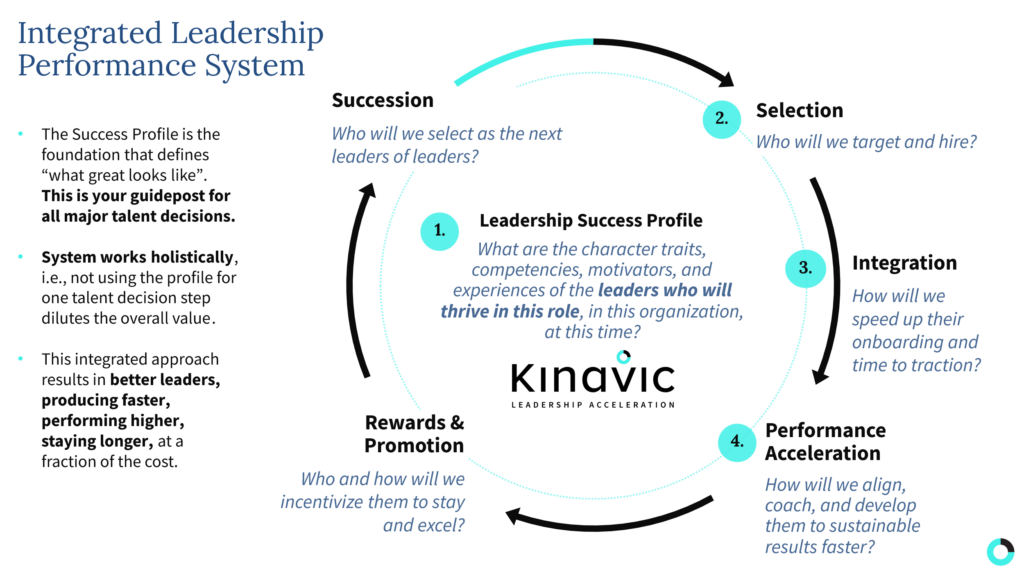
Historically, many leaders in professional services have built careers on providing expert advice, guidance, and recommendations. While these insights and expertise remain important, they are no longer sufficient on their own. Increasingly, leaders are expected to demonstrate the ability to translate ideas into tangible results. It’s no longer enough to armchair quarterback from the sidelines.
Today’s leaders need to take the approach of demonstrating and teaching the capabilities clients need to deliver results. We call these leaders Advisor-Doers and it’s these leaders, the ones who are able to step out of the boardroom and onto the factory floor, that will thrive in the age of AI.
In this new context, leadership is evolving from thinking to meaning-making. Effective leaders are no longer differentiated by their ability to generate analysis, but by their ability to interpret it. When a machine can generate thousands of potential solutions in seconds, the leader who can exercise judgment and select the right path becomes the source of value. Rather than simply solving predefined problems, these leaders define which problems are worth solving in the first place, bringing clarity and direction in environments where both are increasingly scarce.

 Vibrant shirt
 Premium print
 Organic pad
 Deston T-shirt